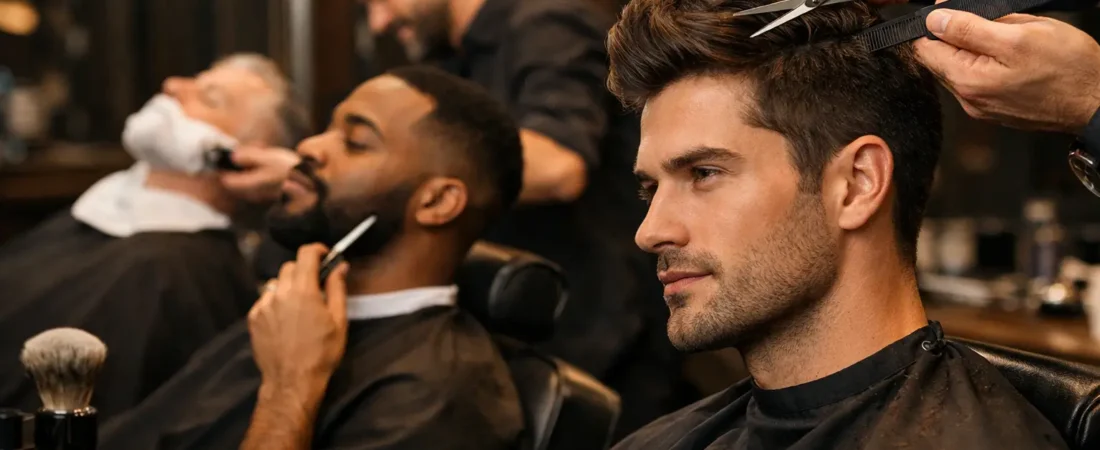
A scissor cut for men is not simply a haircut performed without clippers. It is a more tailored approach to shape, weight, texture, and movement – ideal when you want your hair to look intentional without looking overly engineered. From a clean office-ready style to a relaxed, textured finish, skilled scissor work gives your barber room to shape the cut around your face, hair type, and daily routine.
For men in Williamsburg and across Brooklyn, that flexibility matters. Your hair has to hold up through a long workday, an evening out, a gym session, and the walk home. The right scissor cut creates a polished foundation that feels natural in each setting.
What Makes a Scissor Cut Different?
Clippers are excellent for tight fades, close sides, and sharp contrast. Scissors excel where a more refined transition is needed. Rather than taking hair down to a fixed guard length, your barber can remove weight gradually, soften edges, and preserve length exactly where it benefits your overall shape.
That difference is especially visible in the crown, fringe, and upper sides. A scissor cut can keep fullness where the hair needs support while reducing bulk where it tends to puff out. The result is often more movement and a less uniform finish than an all-clipper cut.
It is also a strong choice for men whose hair does not behave in a simple pattern. Cowlicks, dense hair, fine hair, waves, and uneven growth all respond differently to length. Precision scissor work lets a barber account for those details instead of forcing your hair into a one-size-fits-all shape.
Who Should Choose a Scissor Cut for Men?
A scissor cut works well for men who prefer medium to longer hair, but it is not reserved for longer styles. Even a shorter cut can benefit from scissors on top or through the sides when the goal is a softer, more customized finish.
It is often the right move if you want a classic side part, a textured crop with length, a relaxed sweep, a layered medium-length style, or a fuller silhouette that does not look heavy. It can also be an excellent option when you are growing your hair out. Rather than repeatedly taking the sides too short, a barber can keep the shape controlled while allowing the overall length to progress evenly.
Face shape and hair density matter, too. Men with thicker hair often need careful weight removal to prevent a cut from becoming boxy. Men with finer hair may need strategic layering and a stronger outline to create the appearance of fullness. Neither approach is about following a fixed trend. The best result comes from placing length where it supports your features and removing it where it distracts from them.
A scissor cut may not be the only answer if you enjoy a very tight skin fade or need an extremely close, low-maintenance perimeter. In many cases, the strongest haircut combines both methods: clippers for clean precision at the neckline and lower sides, with scissors through the top and transition areas. Your barber should recommend the balance based on the finish you want, not a preset formula.
The Details Your Barber Is Reading
A premium haircut starts before the first section is cut. Your barber is looking at how your hair sits naturally, where it separates, how it grows at the temples and crown, and how much time you realistically spend styling it each morning.
Hair texture changes the entire approach. Straight hair can reveal every line, so blending must be particularly clean. Wavy hair can look excellent with more length, but it may expand as it dries and needs room to settle. Curly hair benefits from thoughtful shape and balance, because removing too much in the wrong area can create an uneven silhouette.
Your preferred finish matters just as much. Some men want a crisp, controlled look with a defined part and subtle shine. Others want texture that feels touchable and easy, with enough structure to avoid looking unkempt. Those are different cuts, even when the requested length sounds similar.
This is why phrases such as “just take a little off” can leave too much open to interpretation. A good consultation is more useful than a vague length request. Bring up what you like about your current cut, what becomes difficult after two or three weeks, and whether you need your hair to look polished with minimal product. Those details help shape a result you can actually live with.
How to Describe the Finish You Want
You do not need barber terminology to get a better result. Start with the look and the routine. You might say you want the sides to stay natural rather than tight, the top to have enough length to sweep back, or the crown to sit flatter. Mention whether you normally wear your hair forward, off the face, parted, or loose.
Photos can help when they show hair similar to yours in density and texture. Still, a reference image is a direction, not a blueprint. A style that works on straight, dense hair may need a different structure on fine or wavy hair. An experienced barber will translate the feeling of the photo into a cut that works for you.
Be equally clear about what you do not want. If you dislike exposed scalp at the sides, a disconnected look, bulky corners, or a fringe that falls into your eyes, say so. Small preferences make a major difference in a personalized service.
Styling a Scissor Cut Without Overworking It
The appeal of a scissor cut is often its natural movement, so avoid burying it under too much product. Start with clean, towel-dried hair and use a small amount of product appropriate for your finish. A lightweight cream can add control without stiffness, while a matte paste can create separation and texture. For a more classic style, a modest amount of pomade can provide direction and a polished sheen.
Blow-drying is worth the extra minute when you want consistent shape. Direct the hair into place with your fingers or a brush while it is still slightly damp. This sets the foundation before product goes in, meaning you can use less product afterward and retain a more natural feel.
The trade-off is simple: more length and texture usually require a little more attention than a close clipper cut. That does not mean a complicated routine. It means choosing a cut that matches your real habits. If you prefer to shower, apply product, and leave in five minutes, tell your barber. A well-designed scissor cut should support your morning, not add friction to it.
Keeping the Shape Looking Intentional
Scissor cuts tend to grow out gracefully because they are built with softer transitions and customized weight distribution. Still, the timing of your next appointment depends on your style. A neat, shorter scissor cut may benefit from a refresh every three to five weeks. Medium-length styles can often go longer, especially if the neckline and sideburns remain clean.
Pay attention to the first signs that the shape is losing balance. Your hair may start to feel too wide at the sides, collapse at the crown, or become harder to style in the direction you prefer. Booking before the cut reaches that point usually makes maintenance easier and keeps the overall look more consistent.
If you wear a beard, the relationship between haircut and facial hair deserves attention. A softer, longer scissor cut can pair well with a structured beard shape, while a tighter haircut may call for a cleaner, more compact beard outline. Keeping both elements balanced creates a stronger, more composed presentation.
The best scissor cut does not announce itself with hard lines or unnecessary complexity. It sits properly, moves well, and makes getting ready feel easier. Tell your barber how you want to show up, then let precision craftsmanship shape the details that carry the look from the chair into the rest of your week.