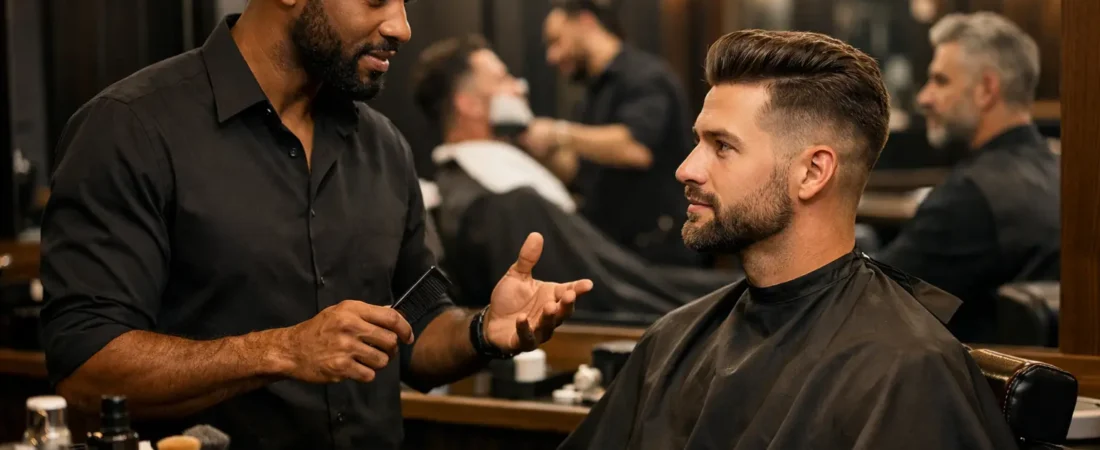
The first few minutes in the chair often determine whether a haircut feels like you or simply looks acceptable. A thoughtful haircut consultation for men gives your barber the information behind the request: how you wear your hair, how much maintenance you want, what has not worked before, and where you need the cut to take you next.
That conversation is not an extra step before the service. It is the foundation of a precise result. A clean skin fade, an understated scissor cut, or a sharper beard line all look better when the shape is built around your features, hair texture, and everyday routine.
Why a Haircut Consultation for Men Matters
Two men can ask for the same fade and leave with very different cuts. Hair density, growth patterns, head shape, hairline, facial hair, and personal style all affect how a style should be executed. Even the phrase “short on the sides” can mean anything from a soft taper to skin at the temples.
A consultation brings clarity before the clippers start. Your barber can assess the areas that matter most: where your crown grows, whether your hair pushes forward or back, how your neckline sits, and how much weight your hair carries at the sides. This helps prevent the common mismatch between the haircut you pictured and the one your hair can comfortably support.
It also makes regular appointments more valuable. Once a barber understands your preferred length, usual styling direction, and desired finish, each visit becomes more consistent while still allowing room to refine the look with the season, your schedule, or a special event in mind.
Arrive With a Clear Starting Point
You do not need a technical vocabulary to have a useful consultation. In fact, the best place to begin is with how you want to feel and function after the appointment. Maybe you need a polished cut for client meetings, a creative shape with some length and movement, or a low-maintenance finish that still looks intentional between visits.
Be direct about what you liked and disliked about your last haircut. Saying “the sides felt too tight” or “the top got heavy after two weeks” gives a barber more useful direction than asking for the same style again. If your hair tends to puff at the sides, separate at the crown, or lose its shape quickly, mention that early.
A reference photo can help, particularly when it shows the length or finish you are after. It should be treated as a reference, not a blueprint. The person in the photo may have a different hair type, density, hairline, or styling routine. A skilled barber will identify the elements worth adapting to your hair, whether that is the softness of the blend, the balance of the silhouette, or the texture through the top.
Talk About Your Normal Routine
The right haircut should work at 8 a.m. on a weekday, not only when it has been carefully styled in the barbershop. Tell your barber whether you typically use a styling product, blow-dry your hair, wear a hat for work, or prefer to run your hands through it and go.
This is where trade-offs matter. A sharply defined crop may look exceptional with regular upkeep and a little product, while a longer scissor cut can offer more natural movement but may require more deliberate styling. A high skin fade creates a striking contrast, but it grows out more visibly than a lower, softer taper. Neither is inherently better. The right choice depends on the level of maintenance you want to carry between appointments.
Your work and social calendar can guide the decision as well. If you have an event coming up, let your barber know whether you want a fresh, crisp finish that day or enough time for the cut to settle naturally. Details such as beard shaping, a clean neckline, or a relaxing hot towel shave can complete the overall presentation when the occasion calls for it.
The Details Worth Discussing in the Chair
A good barber will ask questions, but you can also bring up the details that tend to make the biggest visual difference. Start with length. Rather than only saying “keep it short,” explain whether you want to see scalp at the sides, retain some coverage, or maintain enough length to style the top in more than one direction.
Then discuss the transition. A fade describes how the hair moves from shorter to longer, but placement changes the entire impression. A low fade keeps more weight around the head and often feels more conservative. A mid fade brings more definition through the sides. A higher fade creates stronger contrast and can make the top appear more prominent. A taper is generally more restrained, focusing the clean-up around the sideburns and neckline while preserving length through the sides.
The neckline deserves the same attention. A natural neckline usually grows out more softly and can be practical for men who prefer a less frequent clean-up. A more defined finish offers immediate sharpness, especially alongside a beard, but its lines may need maintenance sooner. Your barber can recommend the option that suits your hair growth and appointment rhythm.
Be Honest About Your Hairline and Crown
A mature hairline, a cowlick, or thinning at the crown is not something to work around in silence. It is useful information. The right approach may be to preserve more length and texture in one area, reduce bulk in another, or avoid a shape that emphasizes a pattern you would rather soften.
This is also why requesting a drastic change without discussion can be risky. Going much shorter may reveal the shape of the head or a growth pattern you have not seen in a while. Keeping extra length can provide styling flexibility, but it can also add weight where your hair naturally expands. An experienced barber can explain those choices without making the conversation overly complicated.
Make the Beard Part of the Plan
For men with facial hair, the haircut and beard should be considered as one composition. A tight fade with a full beard can look balanced when the sideburn transition is clean and the beard shape is intentional. A longer hairstyle may call for a softer beard finish to avoid making the overall look feel too heavy.
Tell your barber whether you are growing your beard out, maintaining a specific length, or looking for a sharper outline. The goal is not to create the most dramatic lines possible. It is to create a shape that works with your jawline, mustache, cheek line, and preferred level of polish. Professional beard trimming and shaping can bring structure to the face without making the result look overworked.
Questions That Lead to a Better Cut
The strongest consultations are collaborative. If you are unsure which direction to take, ask your barber what they would recommend based on your hair and lifestyle. You might ask how the cut will grow out, how often it typically benefits from a refresh, or whether a different fade height would better suit your proportions.
It is also worth asking how to style the finished cut at home. A quick demonstration of where to apply product, how much to use, and which direction to work the hair can make the difference between a great barbershop finish and a frustrating morning routine. Keep the question specific: “How do I get this texture back tomorrow?” is far more useful than simply asking what product was used.
If something feels unclear, speak up before the service moves forward. A small adjustment in length, blend height, or fringe direction is easiest to make at the beginning. Clear communication is not being difficult. It is how personalized grooming works.
Build a Better Relationship With Your Barber
A trusted barber learns more with each visit. Share your preferences, but remain open to professional feedback when your hair, beard, or routine points toward a better option. Precision is not about forcing every client into the same formula. It is about knowing which details should remain consistent and which can be adjusted for a more refined result.
At Gentlemen’s Barbershop in Williamsburg, that standard begins before the first pass of the clippers. The consultation creates space for expert guidance, then turns it into a haircut, beard service, or shave that feels considered from every angle.
The next time you sit down for a cut, bring more than a style name. Bring a sense of how you live, how you want to look, and how much effort you want your grooming routine to require. A few clear minutes of conversation can make every day after the appointment feel more put together.