A clean skin fade has nowhere to hide. The transition from bare skin to short hair must be smooth, balanced, and intentional from every angle. When it is cut with care, it gives a haircut a sharp outline, makes the top look more defined, and holds its polished appearance whether you are heading to the office, dinner in Williamsburg, or a weekend event.
It is also one of the most personal cuts a man can get. Fade height, hair density, head shape, beard length, and daily styling habits all affect the right result. The goal is not simply to take the sides down to skin. It is to create a clean graduation that suits the person wearing it.
What Is a Skin Fade?
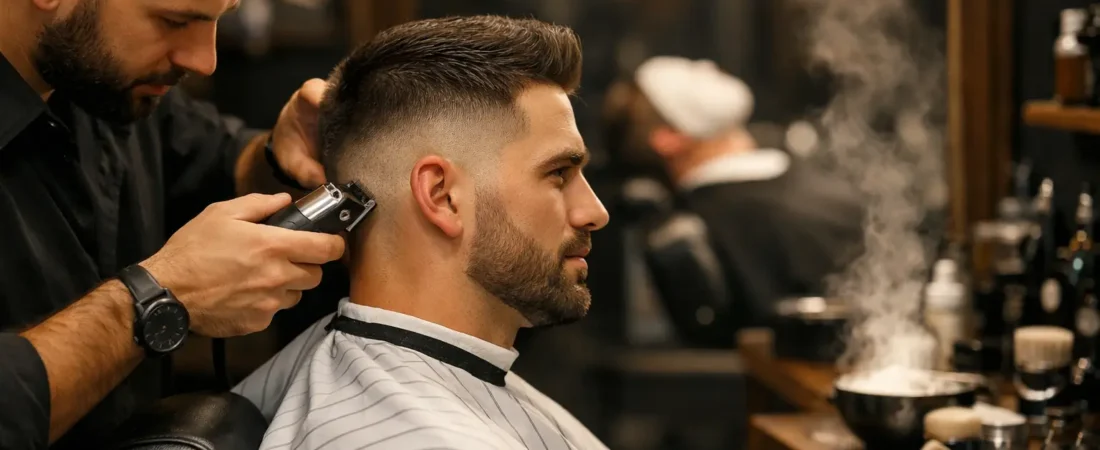
A skin fade, sometimes called a bald fade, tapers the hair down until it reaches skin at the shortest point. From there, the barber gradually blends through increasingly longer clipper lengths into the hair above. The finished effect is crisp but natural, with no visible lines separating one length from the next.
The detail work is what separates a precise fade from an ordinary short haircut. A skilled barber controls the shape of the transition around the temples, behind the ears, and through the back of the head. Those areas are rarely identical from side to side, so a good fade is adjusted to the individual rather than cut by a rigid formula.
A skin fade can work with many styles on top: a textured crop, short pompadour, side part, curly top, slicked-back shape, or a longer scissor-cut finish. It is not limited to one aesthetic. What changes is the contrast. Because the sides are taken to skin, the top naturally becomes the focal point.
Choosing the Right Skin Fade Height
The height of the fade changes the entire character of the haircut. A low skin fade begins close to the ear and neckline, leaving more weight around the upper sides. It is clean and modern without feeling overly dramatic, making it a strong option for men who want a refined look with some softness.
A mid skin fade rises closer to the temple area and creates more contrast. It tends to look balanced on a wide range of face shapes and pairs well with textured or neatly styled tops. For many men, it offers the right middle ground: noticeable precision without taking the fade too high.
A high skin fade starts much higher on the head, removing more side weight and putting full attention on the hair above. It can make a strong statement and works particularly well when the top has enough length, texture, or volume to balance it. The trade-off is maintenance. A high fade often looks its sharpest for a shorter window because more of the scalp is exposed as the hair grows.
There is no universally best height. A barber should consider the natural recession at the temples, the crown pattern, the width of the head, and how the haircut connects to the beard. A low fade can help retain balance for someone with a longer or narrower face, while a higher fade may suit someone who prefers a more pronounced, athletic profile.
The Top Matters as Much as the Fade
The fade gets attention, but the top determines how the haircut wears day to day. A short textured top offers an easy, low-effort finish. With a small amount of matte styling product, it can look controlled without appearing stiff. This combination is practical for busy professionals and anyone who wants a clean shape without a long morning routine.
Men with thicker hair may prefer a little more length and texture through the top. That extra movement keeps the style from looking too severe against tightly faded sides. For straight, fine hair, a structured crop or a slightly longer top with a directional style can create the appearance of density.
Curly and coily hair also pairs exceptionally well with a skin fade. The contrast highlights natural texture while keeping the perimeter clean. In this case, the barber must account for shrinkage, curl pattern, and how the hair sits once dry. Cutting a curl pattern as though it behaves like straight hair can leave the overall shape uneven.
If you wear your hair longer on top, ask for guidance on the amount of disconnect you want. A dramatic contrast may be the right choice, but a more gradual blend can feel more versatile for work, formal settings, and everyday wear.
Why Precision Around the Hairline Matters
A fade is only part of the finished presentation. The hairline, sideburns, neckline, and beard connection all need to feel deliberate. Clean lines can frame the face and bring definition to the haircut, but they should still respect your natural growth pattern.
An overly aggressive edge-up may look extra sharp on the day of the appointment, yet it can grow in awkwardly. A thoughtful barber keeps the line natural and uses detail work to enhance what is already there. This is especially important around the temples, where pushing a line back can change the way the haircut ages between visits.
For men with beards, a skin fade can transition directly into a beard fade or a well-shaped sideburn. This creates a cohesive profile instead of treating the haircut and beard as separate services. The right connection depends on beard density and length. A fuller beard often benefits from a gradual blend, while a shorter beard can support a tighter, more defined transition.
What to Tell Your Barber Before the Cut
A good consultation does not need to be complicated. Start with how you want the haircut to feel: understated, bold, easy to style, or more tailored. Mention how frequently you are willing to return for maintenance and whether you wear a beard, glasses, hats, or a specific style of clothing for work.
Photos can be useful, especially for showing the general shape you like. Still, they are best used as a reference rather than a fixed instruction. The same fade can look different depending on hair type, head shape, and density. An experienced barber can translate the idea into a version that works for you.
Be clear about what you do not want as well. If you prefer not to show too much scalp, want to retain weight near the upper sides, or need a style that can look polished with minimal product, say so early. Those details help determine fade height and the right approach to the top.
Keeping a Skin Fade Looking Fresh
A skin fade is a high-detail haircut, so growth becomes visible sooner than it does with a longer taper or scissor cut. Most men who want the fade to stay consistently crisp return every two to three weeks. Some can comfortably stretch that schedule longer, particularly with a low fade or more length on top, but the cleanest skin-level finish naturally has a shorter lifespan.
Between appointments, focus on scalp comfort and simple styling. If your scalp tends to feel dry after close clipper and razor work, use a gentle cleanser and avoid heavy product buildup. A lightweight moisturizer can help maintain comfort without leaving the skin greasy.
For the hair on top, choose product based on the finish you want. Matte clay or paste works well for texture and a natural hold. A light cream can tame medium-length hair while keeping movement. If you prefer a more classic side part or combed-back look, use a modest amount of pomade and build only as much hold as needed.
Avoid trying to clean up the fade yourself between visits. A small adjustment around the neckline may seem harmless, but it can disturb the shape and make the next blend more difficult. The value of a skin fade comes from the controlled progression of lengths, not just the shortest setting.
When a Skin Fade May Not Be the Best Choice
A skin fade is versatile, but it is not automatically the right answer for every head of hair or every lifestyle. Men who prefer a softer, less exposed look may be better served by a taper fade. Someone dealing with scalp sensitivity, irritation, or visible blemishes may also prefer leaving a little more length at the base rather than taking it fully to skin.
It can also depend on maintenance expectations. If you only want a haircut every five or six weeks, a longer taper or scissor-led cut may grow out more comfortably. A skin fade is a commitment to a clean, close finish, and it looks best when it is maintained accordingly.
At Gentlemen’s Barbershop, the best skin fade begins with an honest conversation about your hair, routine, and preferred level of contrast. Choose the version that feels right when you leave the chair and still feels like you two weeks later. That is the kind of precision that makes a haircut part of your personal standard, not just another item on the calendar.