
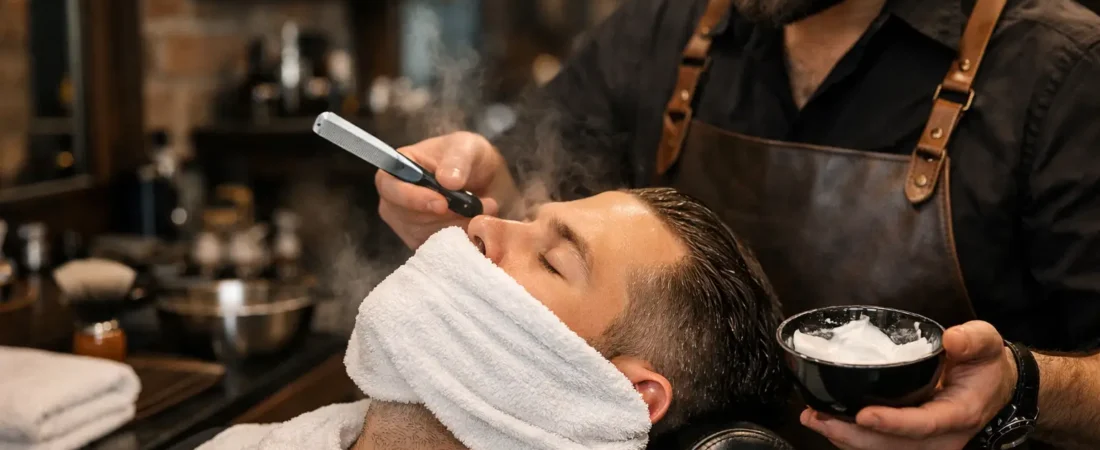
A straight razor shave should feel unhurried from the first warm towel to the final clean finish. The quality of the shave is shaped by the barber’s technique, of course, but knowing how to prepare for straight razor shaves gives your skin the best possible starting point. A few thoughtful steps can help reduce irritation, soften coarse facial hair, and make the experience more comfortable.
For men who keep a close shave as part of their regular grooming routine, preparation is not about adding a complicated regimen. It is about arriving with clean, calm skin and giving your barber a clear picture of what your face needs that day.
Prepare for Straight Razor Shaves With Clean Skin
Begin with a gentle cleanse before your appointment, ideally within a few hours of arriving. Throughout the day, skin collects oil, sweat, sunscreen, dust, and product residue. Removing that buildup helps the hot towel and shave preparation work directly on the beard and skin rather than through a layer of grime.
Use a mild facial cleanser and lukewarm water. Avoid harsh soap, aggressive scrubs, or anything strongly fragranced if your skin tends to react. The goal is clean skin, not a tight or stripped feeling. When the skin’s natural barrier is already irritated, even an expertly performed close shave can feel less comfortable afterward.
If you are coming from the gym, a long commute, or a humid Brooklyn afternoon, washing your face beforehand is especially worthwhile. Pat dry rather than rubbing hard with a towel. That small detail helps avoid unnecessary redness before the service even begins.
Give Your Beard Enough Length to Work With
A straight razor delivers a particularly close result, but facial hair still needs enough length for the blade to catch it cleanly. For most men, 24 to 48 hours of growth is a good range before a full straight razor shave. If your beard grows quickly or comes in especially coarse, a little more length may make the service more efficient and comfortable.
There is no single rule for every face. Men with light, fine growth may prefer a daily or near-daily shave, while those prone to razor bumps often benefit from allowing a bit more time between appointments. Your barber can help establish a schedule that fits your growth pattern, skin sensitivity, and preferred level of polish.
Avoid shaving immediately before a straight razor appointment just to look tidy. Freshly shaved skin may be more sensitive, and very short stubble can be harder to remove evenly. Let the appointment do the work it is meant to do.
Do not trim into problem areas
If you have a beard line, mustache, goatee, or sideburn shape you want maintained, resist the urge to make last-minute corrections at home. A small uneven spot can change the line your barber has to work with. Arriving with your natural growth intact gives more room for precise shaping.
The same applies if you are growing out a beard. Explain the long-term goal before the shave begins. A skilled barber can clean the cheeks, neck, and edges while preserving the density needed for the style you are building.
Skip Harsh Exfoliation and New Products
Exfoliation can help clear surface buildup, but timing matters. Do not use a strong chemical exfoliant, retinol treatment, peel, or abrasive face scrub on the day of your shave. These products can leave skin more reactive, even when there is no obvious redness.
If exfoliation is already part of your normal routine, do it lightly the evening before or a day earlier. Men with sensitive skin, active breakouts, eczema, or frequent ingrown hairs should be more conservative. In those cases, a simple cleanse and moisturizer are usually the better choice.
It is also wise to avoid trying a new skincare product in the days leading up to a shave. A premium grooming appointment is not the right time to find out that a new serum or scented balm causes irritation. Keep your routine familiar and let your barber know about any product reaction you have had recently.
Moisturize, But Do Not Overload Your Face
Healthy, hydrated skin generally handles shaving better than dry, flaky skin. Apply a lightweight, non-greasy moisturizer after cleansing if your face feels dry. This can help support the skin barrier without leaving a heavy layer that complicates the shave preparation.
Avoid thick beard oils, waxes, or heavy balms right before the appointment. They are useful products when chosen for the right purpose, but a dense coating can make it harder to assess your natural beard growth and prepare the hair evenly. If you use beard oil daily, skip it that morning and bring up your usual routine during the consultation.
Hydration also comes from the basics. Drink water throughout the day, particularly if you have had a lot of coffee, spent time outdoors, or had a late night. It will not change your skin overnight, but consistently hydrated skin often looks and feels better after close grooming.
Tell Your Barber What Your Skin Has Been Doing
The best straight razor shave is personal. Before the service begins, mention anything that could affect your comfort: sensitivity on the neck, recurring razor bumps, a recent breakout, a cut, dry patches, or areas that always seem to sting after shaving. You should also point out any medications or topical treatments that make your skin more delicate.
Be specific about the result you want. Do you want a completely clean shave, a defined beard outline, a softened mustache, or a close cleanup around a short beard? Clear communication helps your barber make the right decisions around pressure, direction, and detail work.
This is particularly valuable if you have a beard that grows in different directions. Many men have a swirl under the jaw, dense growth along the chin, or a neck area that reacts when shaved too closely against the grain. Those details are not minor. They guide a more comfortable, more refined service.
Plan the Appointment Around Your Day
A straight razor shave leaves you looking polished, but some skin can show temporary warmth or redness after close blade work. If you are new to the service or know your skin is reactive, avoid scheduling your first appointment immediately before a major photo, meeting, or evening event. Giving yourself a few hours of breathing room is a smart move.
Try not to book right after a sun-heavy day, intense workout, or other activity that leaves your face flushed. Excess heat and sweat can make skin more sensitive. If you are heading to an important occasion later, a well-timed shave earlier in the day allows the skin to settle while still leaving you with a clean finish.
For many clients, a straight razor shave pairs naturally with a precision haircut, beard trim, or hot towel treatment. Coordinating services makes the appointment feel considered rather than rushed, especially when you want a complete grooming reset.
What to Do Immediately After the Shave
Your barber will finish the service with the appropriate post-shave care, often including calming products selected to refresh the skin. Once you leave, keep the rest of the day simple. Avoid touching your face, picking at small bumps, or applying heavily scented products over freshly shaved areas.
Give your skin time before intense exercise, steam rooms, or prolonged sun exposure. If you need to be outside, use a gentle sunscreen once the skin feels settled. That matters year-round in Williamsburg, where walking, biking, and commuting can put freshly shaved skin in direct contact with wind, sun, and city air.
That evening, cleanse gently and moisturize if needed. Do not chase an extra-smooth feeling with another pass of a razor at home. A close professional shave has already done its job.
Build a Routine That Fits Your Face
Preparation becomes easier once you notice your own patterns. Pay attention to how your skin feels after different intervals between shaves, whether your neck needs extra care, and which products leave your face calm rather than congested. A regular barber who knows your growth and preferences can make those adjustments with you over time.
At Gentlemen’s Barbershop, straight razor shaving is treated as precision grooming, not a rushed add-on. Come in with clean skin, enough growth for the blade, and a clear sense of the finish you want. Then let the quiet details – warm towels, careful preparation, and skilled hands – do the rest.