A beard can make a clean haircut look sharper, or make an otherwise polished look feel unfinished. That is why a beard trim Williamsburg clients can depend on is more than a quick pass with clippers. The right trim considers your face shape, beard density, growth patterns, neckline, and the way your beard works with your haircut.
At Gentlemen’s Barbershop, beard grooming is handled with the same attention given to precision haircuts and fades. The goal is not to force every beard into one standard shape. It is to create a balanced, intentional finish that looks right on you and remains manageable between appointments.
What a Professional Beard Trim Should Do
A professional beard trim begins with assessment, not immediate cutting. Some beards need length removed to regain shape. Others need only cleanup around the cheeks, mustache, and neckline. A good barber looks at what is already working before deciding what to take away.
The strongest beard shape is usually one that supports the natural structure of your face. A fuller jaw may benefit from controlled tapering through the sides, while a narrower face may call for more weight at the chin. If your beard grows unevenly, strategic length can make sparse areas less noticeable without creating a harsh outline.
Precision matters most at the edges. A clean cheek line can bring order to a dense beard, but setting it too low can make the beard appear smaller than it is. The neckline needs equal care. Taking it too high removes the fullness that gives a beard presence, while leaving it undefined can look unkempt. The right line is clean, natural, and tailored to your growth.
Beard Trim Williamsburg Service With a Personalized Approach
No two beards grow the same way. Coarse hair, soft waves, tight curls, patchier cheeks, and heavy mustache growth all require a different approach. A barber should work with the direction and texture of the hair rather than trying to create an overly sharp shape that will disappear after a few days of growth.
For men in Williamsburg, East Williamsburg, Bushwick, and nearby Brooklyn neighborhoods, a beard trim often needs to fit into a full schedule. You may be heading to a client meeting, working a hospitality shift, preparing for an event, or simply keeping your weekly grooming routine on point. The best result is polished without looking overworked.
That means keeping enough natural movement in the beard while refining the details that people notice first. The lines around the mouth, sideburn transitions, cheek area, and lower neck make a meaningful difference. When these areas are handled with control, even a short beard can look deliberate and well maintained.
Pairing Your Beard With Your Haircut
Your beard and haircut should feel connected. A tight skin fade with a dense, unshaped beard can create an abrupt contrast. In many cases, a gradual taper from the sideburn into the beard gives the entire profile a more balanced finish. With longer hair or a precision scissor cut, a beard may need softer shaping to preserve a relaxed, refined look.
The right combination depends on your personal style and how much maintenance you want to do at home. A highly defined beard line looks crisp, but it may need more frequent touch-ups. A more natural shape can grow out gracefully and still look professional for longer. Neither approach is automatically better. It depends on your routine, beard growth rate, and preferred level of polish.
How Often Should You Get a Beard Trim?
Most men benefit from a professional beard trim every two to four weeks. Short beards and sharply defined styles often need attention closer to every two weeks, particularly if the neckline and cheek lines grow quickly. Medium and fuller beards can usually go longer when the overall shape has been established well.
There is a difference between growing a beard and neglecting one. If you are growing length, regular trims can still help by removing damaged ends, preserving a stronger outline, and keeping the mustache from becoming unruly. The barber does not need to take off significant length to improve how the beard grows and sits.
If your beard starts to feel wider through the sides, loses its jawline definition, or begins to compete with your haircut rather than complement it, it is time for maintenance. Waiting too long can mean more length needs to come off just to restore the original shape.
The Details That Change the Result
A quality beard service is defined by small decisions. Clippers are useful for bulk removal and controlled blending, while shears can refine length and soften areas that would look too blunt with a guard. Detail work around the mustache requires restraint. Removing too much can make a full beard look disconnected, but leaving excess hair over the lip can feel uncomfortable and untidy.
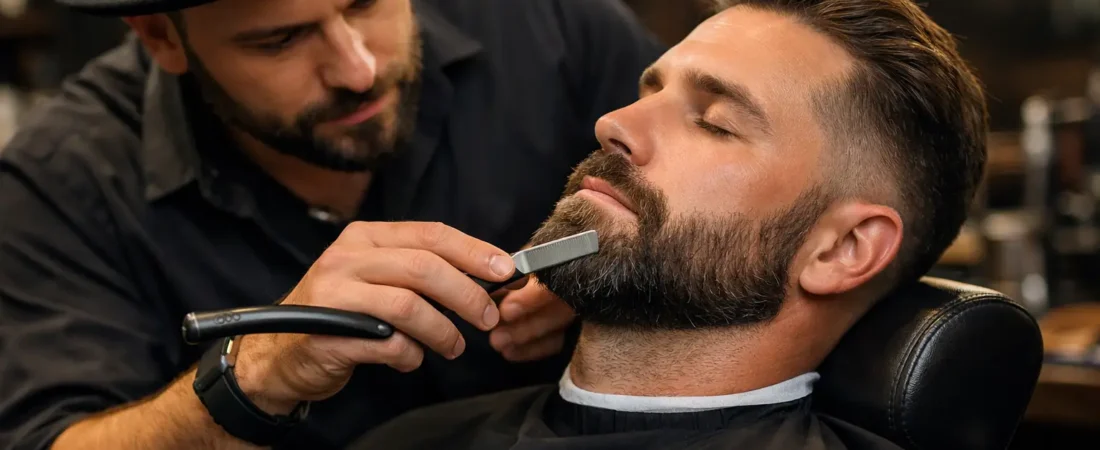
Straight razor work can add a particularly clean finish to the cheeks and neck when it suits the client’s skin and preferred style. A hot towel treatment can make the service feel more relaxing while preparing the skin for close detail work. These additions are not about excess. They are about giving the final shape the care it deserves.
Skin sensitivity is also worth discussing before the trim begins. If you are prone to irritation, ingrown hairs, or dryness, a barber can adjust the service and recommend a more practical maintenance schedule. A sharply shaved neckline is not always the best choice for every skin type. Clean grooming should feel comfortable after you leave the chair, not just look good in the mirror.
Maintaining the Shape Between Visits
Home care should support the work, not replace it. Wash your beard as needed with products that do not leave the skin beneath it feeling stripped or dry. After showering, gently comb or brush it in its natural direction while it is slightly damp. This helps reveal where the beard actually sits before you add any product.
A small amount of beard oil can help soften coarse hair and reduce the dry, rough feel that often develops in Brooklyn’s colder months. For longer or fuller beards, a balm may provide more control. Use less than you think you need. Heavy product buildup can make a beard look greasy and can hide the natural texture that gives it character.
Avoid trying to redraw major lines at home between appointments. A few careful snips at an obvious stray hair are one thing, but taking a clipper to the cheek or neckline can quickly change the balance of the beard. It is easy to correct one uneven side by cutting the other, then lose more shape than intended. Let the professional structure hold until your next trim.
When to Ask for a Change
A beard routine should evolve with your style. You may want more length at the chin, a cleaner mustache, a softer cheek line, or a closer transition into a new fade. Bring it up at the beginning of the appointment. Clear communication gives your barber room to make the right adjustments rather than treating every visit as the same service.
Reference your lifestyle as well as your preferred look. A creative professional with a fuller beard may want texture and shape without rigid lines. Someone who wears business attire daily may prefer a tighter outline and more frequent maintenance. Both can look refined when the proportions are right.
A well-executed beard trim does not need to call attention to itself. It should make your face look more defined, your haircut feel more complete, and your daily grooming easier. Book online or stop in for a visit when your beard needs a cleaner shape, then let the details carry the look forward.