A sharp haircut can look completely different depending on how the sides and neckline are finished. When clients ask about fade versus taper, they are usually choosing between a bold, close-cut transition and a more subtle, classic shape. Both can look polished. The right choice comes down to your hair, face shape, workday routine, and how much contrast you want in the final result.
A skilled barber does more than follow a name on a haircut menu. He considers where the blend should begin, how tightly the sides should be cut, how the crown grows, and how the haircut will look two or three weeks from now. That attention to detail is what separates a haircut that simply looks fresh from one that feels intentional.
Fade Versus Taper: The Core Difference
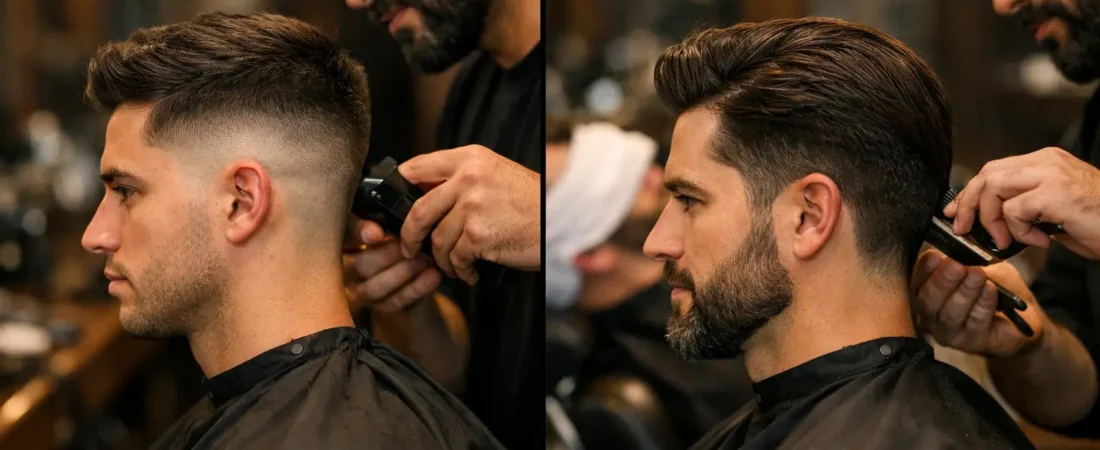
A fade is a more dramatic blending technique. The hair transitions from longer lengths on top into very short hair, skin, or near-skin around the sides and back. That transition may begin low near the ear, sit around the temple in a mid fade, or rise higher toward the parietal ridge in a high fade. The shorter area is a visible part of the style.
A taper is more reserved. It keeps most of the side panels at a consistent, fuller length and gradually shortens only around the temples, sideburns, and nape. Think of it as a clean refinement of a traditional men’s haircut rather than a strong contrast statement.
The distinction matters because a fade changes the overall silhouette of the haircut. A taper preserves it. With a fade, the eye is drawn to the blend and the contrast between the top and sides. With a taper, the eye stays on the natural shape of the cut, texture, and length on top.
A taper fade sits between the two. It uses the concentrated, conservative placement of a taper but takes the hair at the edges shorter, often down to skin. This is why a taper fade can be a strong choice for men who want a crisp finish without committing to a full fade around the entire head.
What a Fade Brings to the Look
A fade offers a clean, modern profile and can make thicker hair feel lighter through the sides. It pairs naturally with textured crops, pompadours, quiffs, short curls, slicked-back styles, and many precision scissor cuts. The contrast can also put more visual focus on the top, which is useful when you have strong texture or want to show more height.
Low, Mid, and High Fades
A low fade begins just above the ears and follows a lower curve around the back of the head. It is often the most understated version of a fade and works well for men who want a polished edge without an overly aggressive shape.
A mid fade sits higher, usually around the temple area. It creates a balanced, versatile look that can work with a wide range of hair types and top lengths. For many clients, it is the middle ground between classic and contemporary.
A high fade starts much closer to the upper side of the head. It creates maximum contrast and leaves little length on the sides. The result can be striking, but it is less forgiving if you prefer a softer grow-out or have an uneven head shape that you would rather not emphasize.
Skin fades take the lowest portion down to the skin for the cleanest possible finish. They look especially precise directly after an appointment, though the sharp effect grows out faster than a longer fade. A number-zero or slightly longer fade maintains a similar shape with a little more softness.
What a Taper Brings to the Look
A taper has staying power because it does not rely on dramatic contrast. It works exceptionally well with side parts, business-ready scissor cuts, longer textured styles, and classic short back-and-sides haircuts. It can still look crisp, especially when paired with a clean neckline and precise sideburn detail, but it reads as more natural from a distance.
For professionals, creatives, and anyone who moves between formal and casual settings, a taper often offers more flexibility. It looks appropriate with a suit, but it does not feel overly conservative with denim and a T-shirt. The cut grows in gradually because the shorter areas are limited to the edges.
A taper can also be the smarter choice if you like more fullness around the sides. Men with fine hair may appreciate how a taper keeps the head shape from appearing too exposed. Men with dense or wavy hair may like it because it controls the perimeter without removing all of the weight.
Choosing Based on Your Hair and Routine
The best answer to fade versus taper is rarely one-size-fits-all. Start with how you want your haircut to perform after you leave the chair.
If you prefer a clearly defined, freshly groomed look and are comfortable returning regularly, a fade may be the better fit. Skin fades and high fades tend to look their sharpest for a shorter window, often making a two-to-three-week maintenance rhythm appealing. A low fade can offer a little more room between visits while keeping a noticeably clean blend.
If you want a haircut that still looks balanced as it grows, choose a taper. Because the side panels remain longer, the cut tends to age more gracefully over several weeks. That does not mean a taper is low effort. It still benefits from precise shaping, especially if you wear a beard or keep your neckline clean, but the grow-out is usually less obvious.
Your natural texture matters as well. Straight, dense hair can showcase the technical detail of a fade beautifully. Curly or coiled hair can look excellent with either option, but the blend should be tailored to the curl pattern and density rather than cut too high by default. Fine hair often benefits from a taper or low fade that retains enough weight to support the overall shape.
Face Shape, Beard Work, and Overall Balance
A haircut should work with the full picture, not just the sides. A higher fade can create more length and vertical focus, which may suit a rounder face. A low fade or taper can feel more balanced for men with longer or narrower face shapes because it maintains width through the sides.
Beard length changes the equation, too. A fade can flow cleanly into a short beard through a well-designed temple transition. A taper often creates a more classic connection to a fuller beard, particularly when the sideburns are kept soft but intentional. The goal is not to force every haircut into a hard line. It is to create a proportionate transition from hair to facial hair.
This is where a consultation makes a visible difference. Bring up how you usually style your hair, whether you wear glasses, how quickly your sides grow, and whether you need the haircut to look restrained for work. Those details help determine not only whether to choose a fade or taper, but also where the blend should sit and how much length should remain.
How to Ask Your Barber for the Right Cut
You do not need barber terminology memorized to get a strong result. Clear preferences are more useful than trying to name every guard length. Explain whether you want the sides to look very close or naturally full, whether you prefer a low, mid, or high transition, and how much styling you do in the morning.
Photos can help, but they should start the conversation rather than end it. The model in a reference photo may have a different density, hairline, head shape, or curl pattern. An experienced barber can adapt the feel of that haircut to suit you instead of copying it blindly.
At Gentlemen’s Barbershop in Williamsburg, the consultation is part of the service. A precision haircut should account for your individual hair growth, preferred maintenance schedule, and the level of polish you want from the moment you leave the shop through the weeks ahead.
The best cut is the one that makes getting ready feel easier. Choose a fade when you want visible contrast and a close, modern finish. Choose a taper when you want a softer, timeless shape with a more forgiving grow-out. Either way, thoughtful barbering turns a simple haircut into a consistently refined part of your routine.