A beard can look full and healthy yet still feel unfinished if its outline is not working for your face. The most effective beard shaping techniques are not about making every line as sharp as possible. They are about creating proportion: a cheek line that looks natural, a neckline that adds structure, and a length that supports your jaw instead of hiding it.
For men who keep a close beard, a dense medium length, or something longer and more textured, the right shape makes daily grooming easier. It also makes your haircut and beard feel like one considered look rather than two separate services.
Start With Your Face Shape and Natural Growth
A strong beard shape begins with an honest read of your growth pattern. Not every beard grows evenly across the cheeks, jaw, and chin. Trying to force identical density on both sides can create a harder, less natural result. A skilled barber works with the beard you have, using length, blending, and thoughtful line placement to make the overall profile look balanced.
Men with rounder faces often benefit from slightly more length through the chin and less bulk at the sides. This introduces vertical definition without making the beard look overly sculpted. For a longer or narrower face, maintaining some controlled width near the jaw can create a more balanced silhouette. A square jaw usually suits a clean, moderately defined outline, though softening the corners can keep the beard from appearing too blocky.
Hair density matters just as much. If your cheeks grow lighter than your chin, a lower, natural cheek line is usually more convincing than a high line carved into sparse growth. If your beard is particularly dense, removing internal weight can prevent it from spreading outward and obscuring your facial structure.
Beard Shaping Techniques That Define the Outline
The outline is where precision matters most. A few millimeters can change the look of your jaw, neck, and side profile. This is why a beard trim is not simply about taking length off. It is a process of establishing the right boundaries first, then blending the interior of the beard into those boundaries.
Set a Natural Cheek Line
The cheek line should follow your natural growth while removing isolated hairs that make the upper edge look uneven. A very high, aggressively squared cheek line can look artificial unless your growth naturally supports it. Most men look sharper with a line that rises gently from the mustache area toward the sideburn, then follows the natural direction of the cheek.
The goal is clean definition, not a painted-on edge. If you prefer a more classic, rugged finish, leaving a little softness at the line can work well. If your personal style is more tailored, the same line can be finished with more precision. It depends on your haircut, your work environment, and how much maintenance you are willing to do between appointments.
Build the Neckline Below the Jaw
The neckline is one of the most common places a beard loses its shape. Trimming it too high can make the beard look thin from the front and disconnected from the jaw. Letting it grow too far down the neck can make even a well-kept beard appear untidy.
A useful reference is the area above the Adam’s apple and below the jaw, but the exact placement should follow the individual. The line should generally curve softly from behind one jaw corner to the other, with enough depth to preserve fullness under the chin. It should not run straight across the neck.
For shorter beards, a clear neckline immediately makes the face look more groomed. For longer beards, the line may sit lower and be less visible, but it still needs to be clean. The underside is what gives a fuller beard its structure when viewed from the side.
Blend the Sideburn Into the Haircut
A beard can be shaped perfectly and still look disconnected if the transition at the sideburn is abrupt. The blend between the haircut and beard should reflect the haircut itself. A skin fade may call for a tighter, more refined transition, while a scissor cut or longer hairstyle often looks better with a softer taper through the sideburn.
This detail is especially valuable when you wear your beard short. With less length to create contrast, the connection between the temple, sideburn, and beard becomes much more noticeable. A barber can adjust that transition so it looks deliberate from every angle.
Shape the Length Before Removing Bulk
Length is the foundation of a beard’s silhouette. Before reducing bulk, decide where the beard needs to sit. A beard that is trimmed to one uniform length can look flat, particularly when it is thick through the chin or heavy under the jaw.
A tailored approach usually keeps more length in the areas that add definition and removes weight where the beard becomes too wide. For many men, that means preserving a little extra length at the chin while refining the cheeks and jaw. Others may need a more even shape to complement a strong natural jawline.
The mustache should also be part of the plan. When it hangs over the lip, it can make an otherwise clean beard feel neglected. A light trim along the lip line keeps it functional and polished. The corners should connect naturally with the beard rather than being cut into overly sharp points unless that is the intended style.
For medium and longer beards, internal bulk removal is often more effective than simply cutting the exterior shorter. Selective thinning and careful scissor work can reduce heaviness while preserving the appearance of density. This is a subtle part of professional beard shaping, but it is often what separates a beard that sits well from one that puffs outward by midday.
Use Tools for Maintenance, Not Major Reshaping
At home, daily maintenance should be straightforward. Brush or comb the beard in its natural direction after washing, then apply a small amount of beard oil or conditioning product if your skin or hair tends to feel dry. A beard balm can help longer beards stay in position, but using too much product can make the hair look heavy or overly glossy.
A guarded trimmer is useful for maintaining surface length between appointments. For the neckline and cheek line, it is wiser to remove only obvious stray hairs rather than attempting to redraw the full shape. Those edges are easy to take too high, and hair needs time to recover if the line is changed too aggressively.
Pay attention to the tools themselves. A clean trimmer, sharp scissors, and a well-maintained comb make a meaningful difference. Dull blades can pull hair and create uneven results, especially in coarser beards. If you use a razor for detail work, keep the pressure light and avoid repeatedly passing over the same area, which can irritate the skin.
Know When a Straight Razor Finish Makes Sense
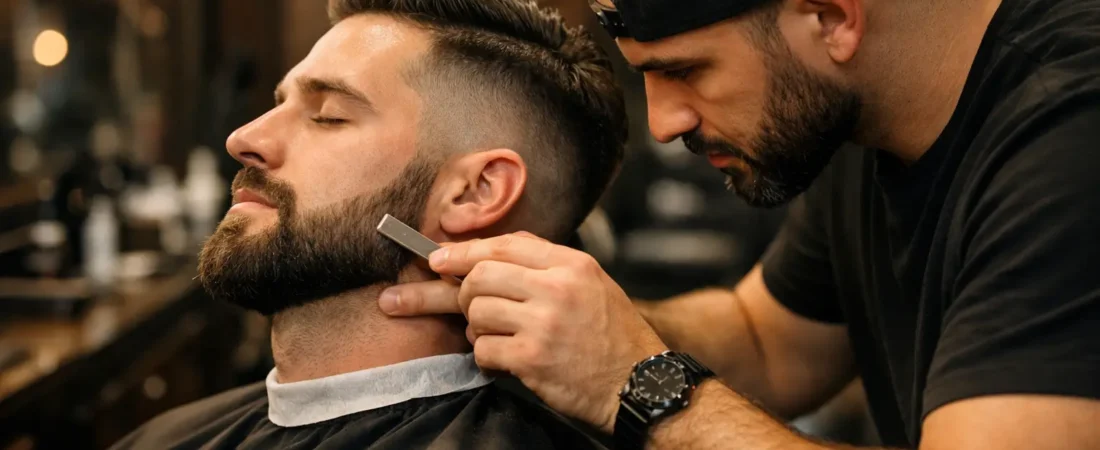
A trimmer creates a clean edge, but a straight razor finish delivers a closer, more polished outline. It is especially effective along the neckline, upper cheeks, and mustache border. The result is crisp without requiring the beard itself to be overly short.
A straight razor shave works best when the skin is properly prepared with heat and lubrication. For men prone to sensitivity, razor bumps, or ingrown hairs, the line placement and technique matter more than chasing the closest possible shave. A slightly softer finish may be the smarter choice if your skin reacts poorly to frequent razor work.
At Gentlemen’s Barbershop in Williamsburg, a beard service is approached as part of your full grooming profile. The barber considers your haircut, face shape, beard density, and the level of upkeep that fits your routine. That personalized attention is what keeps the result sharp after you leave the chair, not just under the barbershop lights.
Keep the Shape Consistent Between Visits
How often you need a beard trim depends on your preferred length and how quickly your hair grows. Short beards usually benefit from more frequent line cleanup, while longer beards can go longer between full reshapes as long as the neckline and mustache stay controlled. If you are growing a beard out, resist the urge to trim every uneven area immediately. A professional cleanup can keep the perimeter intentional while giving thinner sections time to catch up.
The best beard shape should look good on an ordinary Tuesday, not only right after a detailed service. Choose lines and length that suit your features, then maintain them with restraint. When the beard starts to lose its balance, a precise trim and relaxing hot towel finish can bring it back into focus.