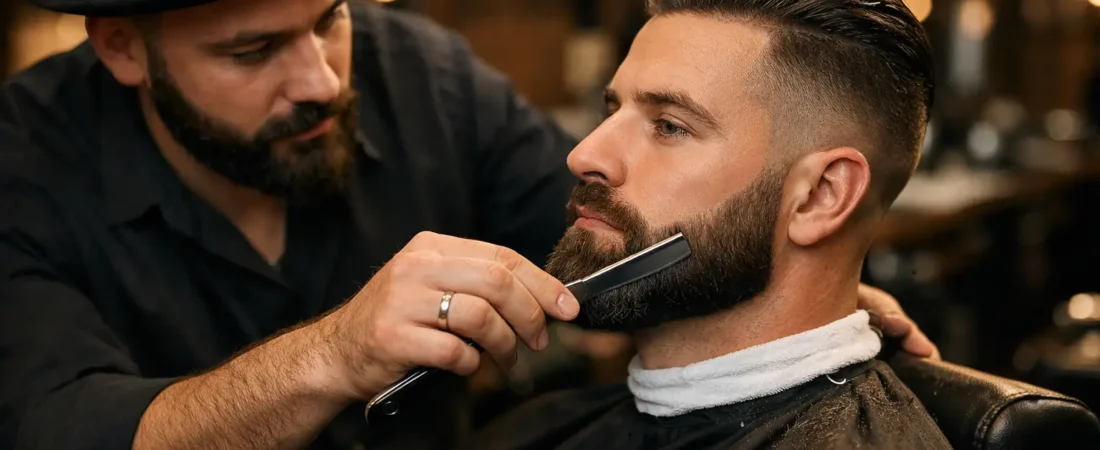
A good beard trim is not simply about taking off length. It is the difference between a beard that looks accidental and one that gives your entire appearance structure. The right shape can sharpen a jawline, bring balance to a longer face, clean up the transition from hair to facial hair, and make getting dressed feel more intentional.
For men who wear a beard every day, the details are rarely minor. A neckline that sits too high can look unnatural. Cheek lines cut too low can make a full beard appear sparse. Uneven bulk around the chin can throw off the profile, even when the rest of the beard has plenty of growth. Precision is what turns good facial hair into a polished part of your personal style.
Why a Professional Beard Trim Looks Different
At home, it is easy to focus on the most visible issue: the extra length in front of the mirror. Professional grooming starts with the full picture. An experienced barber considers your face shape, beard density, natural growth pattern, hairstyle, and how much maintenance you want between appointments.
A beard with strong growth through the chin but lighter coverage on the cheeks, for example, should not be shaped the same way as a dense, uniform beard. Removing too much from the cheeks may make thin areas more obvious. Leaving too much weight at the jaw may widen an already square face. The goal is not to force every beard into the same template. It is to create clean proportions that work with what you naturally have.
The same principle applies to length. A short beard can look crisp and professional with tight edges and controlled texture. A fuller beard needs thoughtful weight removal so it keeps its presence without becoming boxy or unruly. Both require a steady hand, careful symmetry, and an understanding of where the beard should sit on the face.
The Details That Shape a Better Beard Trim
A well-executed beard trim is built around a few connected areas. Each one affects the others, which is why rushing through the service tends to show.
The neckline
The neckline establishes the foundation. When it is left undefined, even a healthy, full beard can look unfinished. When it is placed too high, it can create a tight, artificial look from the side.
A barber will usually place the neckline according to your jaw, neck, and beard length rather than following a fixed rule. Shorter beards often benefit from a sharper lower edge, while fuller beards may need a slightly softer transition that preserves density. The cleanest result still looks natural when you turn your head or look down.
The cheek line
Cheek lines should complement your natural growth rather than erase it. Some men suit a defined, clean line that adds contrast around the face. Others look better with a softer edge that maintains a fuller appearance.
This is especially true if one side grows higher or denser than the other. Perfectly matching lines are not always the answer if they remove too much healthy growth. A skilled barber balances symmetry with fullness, making the beard look intentional from both the front and profile.
The mustache
The mustache has a bigger effect on the final result than many men expect. Hair resting over the lip can make an otherwise fresh beard feel unkempt, while a mustache trimmed too narrowly can look disconnected from the rest of the beard.
The right approach depends on your preferred style and daily routine. Some clients prefer a clean lip line for a more tailored finish. Others want a fuller mustache with controlled length and a softer edge. Either way, it should sit comfortably, look balanced, and work with the beard rather than compete with it.
The chin and side profile
Most people judge their beard from the front, but side profile is where shape becomes especially noticeable. Excess weight below the chin can hide the jaw. Too much length in the front can make the beard appear pointed or uneven. A thoughtful trim removes bulk where it distracts and keeps length where it improves proportion.
This is also where a barber can personalize the shape. A slightly longer chin can add definition to a rounder face. A more compact outline can keep a longer face from looking overly narrow. These adjustments are subtle, but they are the reason a precision service feels more considered than a quick cleanup.
Match Your Beard to Your Haircut
Your haircut and beard should look like they belong in the same plan. A skin fade, taper fade, scissor cut, or longer hairstyle each changes how much contrast makes sense around the sideburns and beard.
With a close fade, a clean transition into the beard can create a sharp, modern finish. With a longer scissor cut, a slightly softer connection may feel more natural and balanced. The right choice depends on your hair density, how you wear your hair, and whether you prefer a high-contrast or more relaxed look.
Sideburns deserve particular attention. They are a small area, but an abrupt, uneven, or overly heavy connection can interrupt the flow from haircut to beard. When the haircut and beard trim are handled together, the result looks composed from every angle instead of like two separate services.
How Often Should You Get a Beard Trim?
There is no single schedule that fits every beard. Growth rate, length, work environment, and personal preference all matter. Men who keep a short, defined beard often benefit from a cleanup every two to three weeks, especially if they prefer crisp cheek and neck lines. Fuller beards may go three to five weeks between shaping appointments, provided the outline is still holding its form.
If you are growing your beard out, regular trimming can still be useful. The purpose is not to slow progress. It is to remove split or uneven ends, manage bulk, and keep the shape from becoming difficult to control. A small amount of strategic refinement often helps a beard look better throughout the growing process.
The best timing is usually simple: schedule a trim when you notice the shape disappearing, not only when the beard feels too long. Once the neckline is blurred, the mustache is crowding the lip, or the sides are expanding beyond the intended silhouette, a professional reset can make a noticeable difference.
What to Ask for at Your Appointment
You do not need to know every technical term to get a beard that suits you. It helps to explain how you want to look and how much time you want to spend maintaining it. Mention whether you prefer sharp lines or a natural finish, whether your beard needs to look conservative for work, and whether there are areas you would like to keep fuller.
Photos can be useful, but they are best treated as a reference rather than a rigid instruction. Beard density and face shape vary, so the strongest version of a style may need adjustment. A clear conversation with your barber makes room for that judgment and helps create a result that looks right on you, not just on someone else.
At Gentlemen’s Barbershop in Williamsburg, a beard trim is approached as part of your overall grooming, with attention to shape, balance, and the finish that fits your day-to-day style.
Keep the Shape Between Visits
Daily maintenance should be simple. Wash your beard as needed, dry it thoroughly, and brush or comb it in the direction you want it to sit. A beard balm or light oil can help with softness and control, particularly in dry weather or when the beard is longer.
Avoid repeatedly trimming the major lines at home if you are unsure where they belong. A few stray hairs can be handled carefully, but frequent adjustments tend to push the cheek or neckline farther than intended. Let the core shape stay intact, then have it refined professionally when it starts to lose definition.
A beard should look like it belongs to you, not like it was cut from a stencil. Keep the lines clean, preserve the right amount of fullness, and give the details enough attention to hold their shape between one good appointment and the next.