A fade can look sharp when you leave the chair and still feel wrong three days later if the shape does not suit your head, hair growth, beard, or routine. That is what separates thoughtful men’s grooming Williamsburg clients look for from a quick maintenance appointment. The goal is not simply a shorter haircut. It is a composed, practical look that holds its shape and feels like your own.
For men moving between the office, a studio, client meetings, restaurants, and weekends around Brooklyn, grooming needs to work under real conditions. A good barber considers how your hair behaves when it grows, where your beard fills in, how much time you actually spend styling, and whether you prefer a clean-cut finish or a more relaxed shape. Precision starts with paying attention.
What Premium Men’s Grooming in Williamsburg Means
Premium grooming is often described as a luxury, but the value is more direct than that. It is the difference between receiving a standard service and receiving a haircut, beard trim, or shave built around your individual features. The consultation matters because even familiar styles need adjustment from one client to the next.
A skilled barber looks at density, texture, cowlicks, hairline movement, face shape, and growth patterns before deciding where a fade should begin or how much weight to remove with scissors. Those details affect the result more than the name of the style. A low taper may suit a professional who wants a quieter transition. A skin fade may suit someone who prefers stronger contrast and is comfortable maintaining it more often. Neither is automatically better.
The experience should also leave room for honest guidance. If a reference photo requires thicker hair, a higher-maintenance styling routine, or a beard density you do not have, the best answer is an adaptation, not a forced copy. A polished result is one that works with your natural assets.
Start With a Haircut That Fits Your Routine
The most useful haircut is one you can live with between appointments. Before your service, think about how you wear your hair on an ordinary Tuesday, not only when you have time to style it carefully. Do you use product every morning? Do you wear a hat for work? Does humidity affect your texture? Are you willing to return every two weeks to keep a fade exceptionally tight, or do you prefer a shape that grows out more softly?
Skin Fades and Taper Fades
A skin fade creates a close, clean transition from the skin upward into longer hair. It can give short styles a crisp, deliberate finish, especially when the top has enough length or texture to balance the contrast. Because the shortest area is exposed, it generally benefits from regular upkeep.
A taper fade is more restrained. It focuses its graduation around the sideburns and neckline while preserving more length through the sides. It is a strong choice for men who want a refined finish without the commitment of a full fade. It can also grow out more gradually, depending on the length and the placement of the taper.
The right choice depends on your preference, your work environment, and how quickly your hair grows. A barber can explain the visual difference clearly, then shape the service around your maintenance schedule rather than pushing a one-size-fits-all look.
Precision Scissor Cuts and Longer Styles
Not every well-executed men’s haircut relies on clippers. Precision scissor work is essential for medium and longer hair, layered movement, natural texture, and shapes that need to fall cleanly without looking overly structured. It is also valuable for clients whose hair needs careful weight removal rather than a dramatic fade.
With longer hair, the challenge is balance. Taking out too much weight can make fine hair appear thinner, while leaving too much can create bulk at the sides or crown. The best approach preserves enough structure for the hair to sit well while allowing it to move naturally. Styling advice should be simple and specific, whether that means a light cream for control, a matte product for texture, or less product altogether.
Beard Grooming Is About Shape, Not Just Length
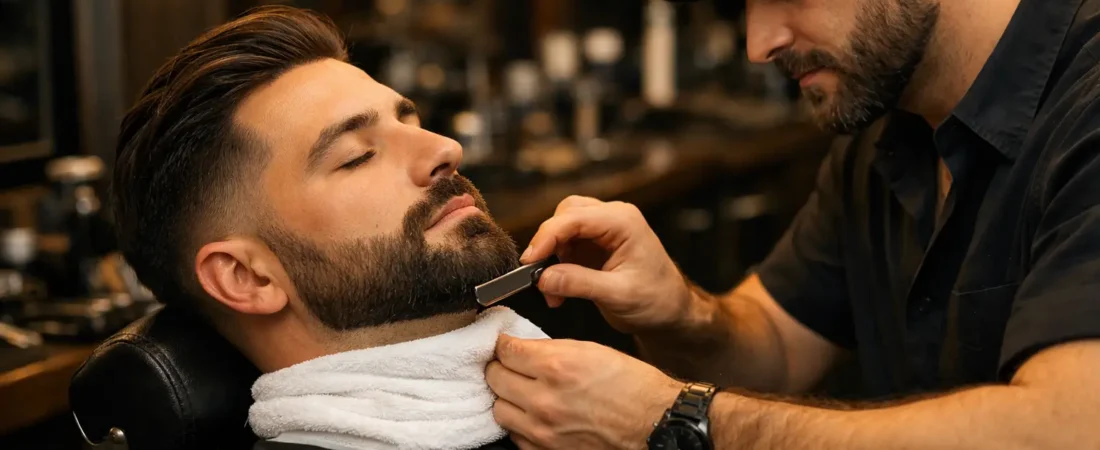
A beard trim can change the entire proportion of a face. It brings order to uneven growth, sharpens the cheek and neck area, and creates a stronger connection between the beard, haircut, and personal style. The aim is not to make every beard look identical. A fuller beard may need careful bulk management, while a shorter beard may benefit from crisp lines and subtle blending at the sideburns.
A good beard service considers where your beard naturally grows strongest. Cheek lines should look intentional without being drawn too high or too harsh. The neckline should complement the jaw rather than sit too close to it. For men with patchier areas, keeping a slightly shorter, more consistent length can often look more deliberate than trying to grow every section equally long.
Maintenance at home should stay straightforward. Cleanse without stripping the skin, use a modest amount of beard oil or conditioner when needed, and brush or comb longer facial hair in the direction it grows. Avoid chasing perfect symmetry with a razor between appointments. Small corrections can quickly change a line that was designed to soften naturally as it grows.
The Value of a Straight Razor Shave and Hot Towel
There are days when a standard trim is not enough. A straight razor shave offers a closer, more detailed finish, particularly around the cheeks, neck, and facial contours. When performed with proper preparation, it is both a grooming service and a chance to slow down.
The hot towel portion is not merely a finishing touch. Warmth helps soften facial hair and makes the service feel more comfortable and restorative. Paired with careful razor work and skin-conscious finishing products, it can leave the face looking clean without the rushed feeling of a bathroom shave.
This service is especially useful before a wedding, a presentation, a vacation, or any occasion when details matter. It is equally appropriate as regular maintenance for men who appreciate a clean shave but prefer the care and control of an experienced barber.
How to Get More From Your Appointment
Clear communication does not require knowing barber terminology. Bringing a few photos can help, but explain what you like about them: the length on top, the softness at the neckline, the beard shape, or the amount of contrast in the fade. Just as useful is explaining what has not worked before, such as a crown that sticks up when cut too short or sides that become too wide after two weeks.
Be open about timing as well. If you have a major event, schedule with enough room to settle into the cut rather than treating the appointment as a last-minute task. If you want a significant change, allow time for consultation and precise work. Quality over speed matters most when the haircut needs to grow out well.
At Gentlemen’s Barbershop, the focus is on that kind of individualized attention: understanding the finish you want, recommending what suits your hair and lifestyle, and taking the time to execute it properly. Walk-ins are welcome when availability allows, while booking ahead is often the better option when your schedule is tight.
Build a Grooming Schedule You Can Keep
Consistency is easier when it matches your lifestyle. Men who wear a skin fade or sharply defined beard often choose appointments every two to three weeks. A taper fade, scissor cut, or longer style may work well on a three-to-six-week rhythm. Beard maintenance can fall somewhere in between, depending on density and the amount of definition you prefer.
There is no benefit in copying someone else’s schedule. Your ideal cadence depends on hair growth, desired contrast, and how polished you want to look from week to week. The practical move is to notice when your shape starts feeling less intentional, then book before it becomes a full reset.
A well-considered grooming routine does more than prepare you for a special occasion. It gives you one less decision to make in the morning. Choose a cut and beard shape that fit your real life, maintain them with care, and leave enough time in the chair for precision to show.