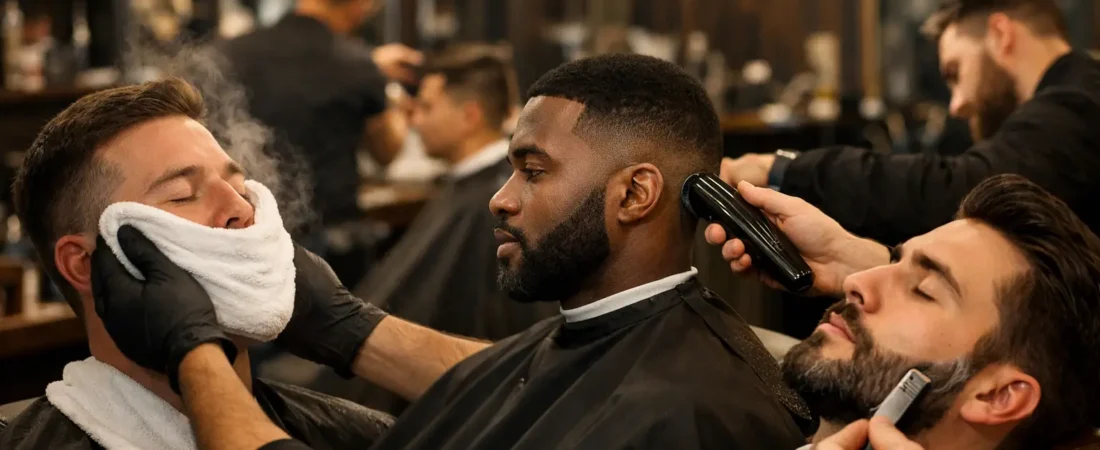
The wedding suit may be tailored, the venue may be set, and the group chat may finally be quiet for five minutes. But a groomsmen haircut before wedding day can still make a noticeable difference in every close-up, candid, and group photo. The goal is not for every man to look identical. It is to make sure each groomsman looks rested, intentional, and well put together beside the groom.
A great wedding haircut is about timing as much as technique. Cut it too early and the outline loses its crispness. Cut it too close to the ceremony and a new style, tight fade, or freshly shaped beard may not have time to settle naturally. A little planning gives the wedding party the kind of polished finish that looks effortless.
When Should Groomsmen Get Haircuts Before a Wedding?
For most men, the best appointment window is three to seven days before the wedding. This timing gives the haircut a chance to relax while keeping the neckline, sideburns, and overall shape clean for the event.
The ideal day depends on the cut. A short skin fade or a closely detailed taper can look especially sharp at the three-to-four-day mark, when the contrast has softened slightly but the lines still look precise. A longer scissor cut, textured style, or medium-length hair may benefit from five to seven days, allowing the hair to fall back into its natural movement.
If a groomsman is trying a new barber, changing his hairstyle, or growing out a beard, the first appointment should happen two to three weeks ahead of time. That visit is the right moment to test the shape, discuss styling, and make any adjustments without putting pressure on the final week. The pre-wedding appointment can then focus on refinement.
A Groomsmen Haircut Before Wedding Day Should Feel Personal
Matching suits do not require matching haircuts. In fact, forcing one style across the entire wedding party can look less polished than allowing each man to wear a cut that works with his hair type, face shape, and usual level of maintenance.
One groomsman may look best with a clean skin fade and textured top. Another may need a classic scissor cut with natural volume. Someone with a beard may benefit most from shaping that creates a stronger jawline and ties the beard into the haircut. The shared standard is not sameness. It is precision.
A skilled barber will consider how the style works in photographs, especially from the side and back. Wedding photos capture more than the front-facing mirror view. Clean transitions at the temples, a balanced crown, and a tidy neckline all matter when the group turns, walks, laughs, and stands at the altar.
Keep the Groom’s Look Distinct
The groom should feel like the best-dressed version of himself, not like another member of the lineup. That does not mean his haircut has to be dramatically different, but it should be considered with extra care.
If the groom wears a sharp fade, groomsmen can still choose tapers, scissor cuts, or fades at varying lengths. If he is keeping a fuller beard or a classic side-part, his grooming should have a little more definition and detail. The effect is subtle, but it helps the groom stand out naturally in photos without making the wedding party look disconnected.
Coordinate the Appointment Without Making It Complicated
A group appointment works well when several groomsmen are local, especially during a busy wedding season. It creates a relaxed moment before the weekend gets moving and helps everyone arrive at the rehearsal or welcome gathering looking sharp. For Williamsburg and nearby Brooklyn wedding parties, Gentlemen’s Barbershop can provide a premium grooming setting for that final pre-event refresh.
Still, a single group appointment is not always practical. Out-of-town groomsmen, different hair lengths, work schedules, and personal grooming needs may call for separate visits. What matters is giving everyone a clear timing recommendation and encouraging them not to wait until the morning of the wedding.
The groom or best man can make this easy with one straightforward message: book your regular haircut three to seven days before the ceremony, avoid major style changes, and schedule beard maintenance in the same window. That is enough guidance to create consistency without turning grooming into another planning spreadsheet.
Beard Trims Need Their Own Timing
A beard should look purposeful, not overly fresh. For most men, a beard trim and shape-up two to four days before the wedding creates the right balance. The barber can clean the cheek lines, define the neckline, remove uneven bulk, and blend the beard into the haircut without leaving the look too sharp or artificial.
Men who shave clean should also avoid experimenting with a new shaving routine immediately before the event. If skin is prone to irritation, a professional hot towel shave or close cleanup one to two days ahead may be more comfortable than shaving aggressively on wedding morning. Smooth, calm skin photographs better than redness covered by rushed grooming.
Beard length makes a difference, too. A short beard can often be cleaned up closer to the date. A fuller beard may need an earlier trim so it retains a natural, settled shape. The right approach depends on growth pattern, density, and how defined the groom or groomsman likes the finish.
What to Ask for at the Barbershop
The clearest request is usually not a trend name. It is a description of how you want to look at the wedding: clean, natural, sharp, low-maintenance, or more formal. Bring up the suit style, whether there will be outdoor photos, and how you normally wear your hair. Those details help a barber make the right call on the level of taper, texture, length, and product.
For a familiar barber, say that the service is for a wedding and ask for the usual cut at its most polished. For a first-time appointment, explain how much styling you are willing to do on the day. A high-volume finish may look excellent in the chair but may not suit someone who does not use a blow dryer or styling product at home.
Avoid requesting a drastic change just because the wedding feels like a special occasion. Going much shorter, trying a hard part, removing a beard, or shifting to a radically different style can be a good move when planned well in advance. In the final week, dependable refinement is usually the better choice.
The Morning-of Routine That Holds Up
Wedding-day grooming should be calm and simple. Shampooing is useful if hair needs a fresh reset, but do not overdo it if your hair becomes dry, flat, or difficult to style afterward. Start with clean, towel-dried hair and use a small amount of the product that already works for you.
For a polished but natural finish, distribute product from the back toward the front, then shape with your hands or a comb depending on the style. Resist the urge to keep adding more. Too much pomade, cream, or clay can make hair look heavy under flash photography and can lose its shape in warm weather.
Pack a small comb and a travel-size version of your regular styling product if the schedule includes a long drive, outdoor portraits, or a quick change between the ceremony and reception. A few seconds of touch-up is plenty. The haircut should do most of the work.
Details That Make a Difference in Photos
Wedding photography tends to reveal the small things men often overlook during a routine week. Check the neckline, ear hair, eyebrows, beard lines, and sideburn symmetry. None of these details need to look overworked, but they should look attended to.
It is also smart to think beyond the haircut. Hydrate, get sleep where possible, and avoid testing unfamiliar skincare or hair products in the days before the ceremony. The most confident look is usually the one that feels familiar, comfortable, and properly maintained.
A well-timed cut gives every groomsman a stronger presence without asking him to become someone else for the weekend. Book early enough to let the finish settle, keep the style true to the man wearing it, and let the photos capture a wedding party that looks as composed as the occasion deserves.