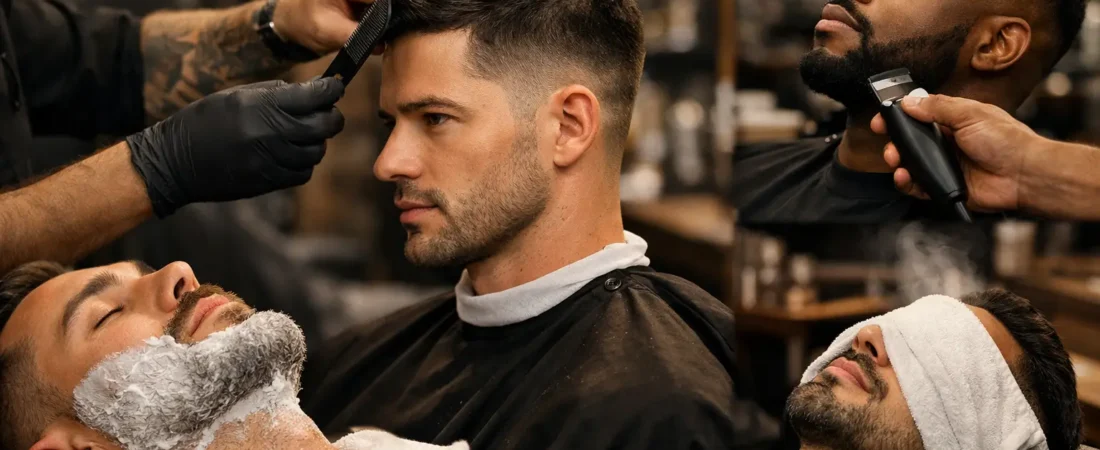
A sharp short cut can look effortless, but it rarely looks accidental. The difference is usually in the details: hair that is prepared properly, product that suits the cut, and a finish that has enough control without appearing stiff. Knowing how to style short men’s hair helps you get more from a precision cut between barber visits, whether you prefer a clean side part, textured crop, polished pompadour, or natural brushed-forward finish.
Short hair is not one style. A tight skin fade with length on top behaves differently from a scissor cut with soft movement, and both require a different hand with product. Start by working with the shape your barber created rather than trying to force your hair into something it is not.
Start With the Right Foundation
The best styling routine begins before the product comes out. Short hair is especially sensitive to excess oil, product buildup, and uneven drying. When the hair sits close to the head, there is less length to hide a flat spot or an awkward direction of growth.
Wash your hair as needed for your scalp and lifestyle. For many men, that means shampooing a few times a week and rinsing after workouts or long days in the city. If your hair tends to feel dry, shampooing every day may strip away too much natural moisture. A lightweight conditioner can keep the top manageable without making fine hair collapse.
After washing, towel-dry with intention. Do not rub aggressively, which can create frizz and leave the hair pointing in every direction. Instead, press out excess water and leave the hair slightly damp. This is the ideal starting point for most short styles because it allows you to set the direction before the hair dries into its natural pattern.
Choose a Product That Matches Your Finish
The product should support the haircut, your hair type, and the impression you want to make. Using the wrong product is one of the quickest ways to make a fresh cut look heavy, greasy, or unfinished.
For a natural, textured result, a matte clay or paste is often the right choice. It adds separation and flexible hold, making it well suited to crops, short quiffs, and styles with movement. Men with thicker hair often appreciate clay because it gives control without an obvious shine.
For a more defined and polished look, consider a pomade. A water-based pomade works well for classic side parts, combed-back styles, and neatly shaped tops. It offers more shine and structure, though it can look too formal or weigh down very fine hair if you use too much.
Cream is a smart option when you want light control and a softer finish. It is especially useful for medium-density hair, longer scissor-cut styles, or men who want their hair to feel touchable rather than fixed in place. Texture powder can help lift fine hair at the roots, but use it sparingly. Too much can leave the hair dry and difficult to restyle.
The rule is simple: begin with less than you think you need. For most short cuts, a pea-sized amount is enough to start. Warm it fully between your palms until it becomes nearly invisible, then distribute it from the back of the head forward. Applying product only at the front creates a heavy fringe and leaves the rest of the style without support.
Match Hold to Hair Length
Very short hair does not need the same hold as a longer top. If your hair is only an inch or two long, a strong product can make it look rigid and overly styled. A low- to medium-hold paste often gives a cleaner result.
If you have several inches of length on top, stronger hold may be useful, particularly when you are building height or trying to keep a side part in place through a full workday. The goal is not to make the hair immovable. It is to give it a controlled shape that still looks natural when you move.
Set the Direction Before It Dries
Most men get better results by deciding where the hair should go while it is damp. Use your fingers for a relaxed, lived-in finish, or use a comb when you want a more intentional part. If your hair has a stubborn cowlick, work with its direction rather than fighting it head-on.
For a textured crop, push the hair forward and slightly upward at the fringe, then use your fingertips to break up the surface. Avoid making every piece identical. A little irregularity gives the style a more modern, confident finish.
For a side-parted look, identify the natural part by combing damp hair straight back and noticing where it separates on its own. Guide the hair across from that point, then use a comb to refine the line if you prefer a crisp finish. Keep the sides close and clean, but do not flatten the top so much that the cut loses dimension.
For a short quiff or brushed-up style, direct the front upward and back while blow-drying. Use low to medium heat and keep the dryer moving. Aim the airflow in the direction you want the hair to sit, then allow it to cool for a moment before applying your finishing product. Heat creates shape, while product helps the shape stay put.
Use a Blow-Dryer When the Style Needs Structure
A blow-dryer is not reserved for long hair or special occasions. It is one of the most useful tools for short men’s styles, particularly if your hair falls flat, grows forward, or resists the direction you want.
You do not need a complicated routine. Start with damp hair, use your fingers or a small brush to guide the top, and dry in short passes. Lift at the roots if you want volume. Dry the hair downward if you want a flatter, tighter profile. Finish with cool air if your dryer has that setting, which helps the hair settle without adding more product.
The trade-off is time. If you leave the house with wet hair and rely on product alone, the style may shift as it air-dries. A few minutes of controlled drying can make a significant difference in how the cut holds its shape from morning meetings to evening plans.
Style for Your Hair Type, Not Someone Else’s
Fine hair benefits from lightweight products, root lift, and restraint. Heavy pomades and oils can make it look sparse or separated. A matte paste or texture powder, used in moderation, usually creates more density.
Thick hair needs distribution. Work product through the full top, not just the outer layer, and consider a cream or clay that adds control without turning the hair into one solid piece. If your hair expands as it dries, use a blow-dryer to set its direction before it has the chance to take over.
Wavy or curly short hair looks strongest when its natural texture remains visible. Rather than combing it flat, use a light cream or curl-friendly styling product and shape it with your hands. A precise taper or fade around the edges gives natural texture a deliberate frame.
Straight hair can look exceptionally clean with a side part, a short quiff, or a forward textured crop. The key is creating contrast. Add lift, separation, or a clear direction so the style does not fall into a flat, uniform line.
Keep the Edges and Beard in Conversation
Short hair draws attention to the perimeter of the cut. A clean neckline, defined sideburns, and fresh fade make the styling on top feel more polished. Once those edges grow out, even the best product routine has less to work with.
If you wear a beard, treat it as part of the overall composition. A neatly shaped beard can balance a tighter cut, while an untrimmed beard can make an otherwise precise style feel less intentional. The right proportion depends on face shape, hair density, and how much contrast you want between the hair and beard.
At Gentlemen’s Barbershop, a barber can help you choose a styling direction that respects your growth pattern and suits the finish you want. That guidance matters, especially when deciding whether a crop, fade, scissor cut, or side-parted style will be easiest to maintain at home.
Refresh Without Starting Over
Short hair often needs a quick reset late in the day. Instead of adding another full layer of product, wet your hands lightly and run them through the hair to reactivate what is already there. Restyle the front with your fingers, then add a tiny amount of product only where control is missing.
Avoid repeatedly touching your hair throughout the day. It transfers oil from your hands, breaks up the shape, and can make matte styles lose their clean finish. A small comb is useful for a classic side part, while your hands are usually better for textured styles.
A short style earns its confidence through consistency. Once you know the direction, product, and level of finish that suit your cut, the routine becomes quick – and your hair looks considered every time you step out.