A professional haircut for job interview day is not about changing your identity or copying a corporate look that does not feel like you. It is about arriving polished, prepared, and comfortable in your own presentation. Before a hiring manager hears your introduction, they notice the details that suggest care: clean lines, balanced proportions, and grooming that looks intentional rather than rushed.
For New York professionals, creatives, and entrepreneurs, the right cut should carry you from the interview room to the rest of your week. The goal is refinement, not rigidity.
What Makes a Haircut Interview-Ready?
An interview-ready haircut looks maintained without looking overly styled. It works with your face shape, hair texture, wardrobe, and the setting you are walking into. A finance or legal interview may call for a more conservative silhouette, while a role in design, hospitality, or a startup can leave more room for personal style. In either case, precision matters.
The strongest choices tend to have a clean outline around the ears and neckline, enough length on top to create controlled shape, and a transition at the sides that suits your natural growth pattern. A scissor cut can provide a classic, understated finish. A taper or low fade can look equally professional when it is blended cleanly and kept proportional. The best option depends on your hair, not on a one-size-fits-all trend.
A sharp haircut should support the way you want to be perceived: attentive, composed, and ready for responsibility. It should never become the loudest thing in the room.
Choose a Style That Feels Like You
Trying a dramatic new look just before an interview adds unnecessary uncertainty. If you already wear a style that fits you well, ask for a fresh version of it. Your barber can refine the shape, remove bulk, clean up the perimeter, and make the overall finish more deliberate without taking you too far from familiar territory.
If you are ready for a change, keep it measured. A side-parted scissor cut, textured crop, short back and sides, or low taper can all read as polished when adapted to the individual. Men with thick hair may benefit from weight removal and controlled texture. Fine hair often looks stronger with a shape that preserves density rather than thinning it too aggressively. Curly or coiled hair can look exceptionally professional with a balanced silhouette and crisp, natural-looking edges.
The conversation with your barber matters as much as the style itself. Mention the type of role, the dress code you expect, whether you wear glasses, and how much time you realistically spend styling your hair each morning. A good barber uses those details to create a cut that performs beyond the chair.
Keep fades and lineups in proportion
A skin fade can be clean and modern, but its height and contrast should suit both your features and your workplace. A low skin fade or low taper often gives a polished result while keeping the look versatile. Higher fades can work beautifully, especially for men who wear them regularly, but they create a bolder profile.
The same principle applies to a lineup. Defined edges can frame the face and make a haircut look fresh, yet the line should follow your natural hairline rather than force an artificial shape. Precision is most convincing when it still looks natural.
Timing Your Professional Haircut for a Job Interview
Book your haircut two to five days before the interview. This window gives the cut time to settle while preserving the clean finish around the neckline, sideburns, and ears. It is especially useful if you usually need a day or two to adjust to a fresh fade, shorter sides, or a newly shaped top.
The day before can work if you know exactly what you are getting and prefer a very crisp look. Avoid scheduling a major style change the night before, though. Even an excellent cut can feel unfamiliar when there is no time to live in it.
If your interview is on Monday, consider booking late in the previous week. You will avoid a last-minute rush and have time to check the full look with your interview outfit. Hair, beard, shirt collar, and eyewear should feel like one considered presentation.
Do Not Let Beard Grooming Become an Afterthought
For men with facial hair, a beard trim or shape-up can make as much difference as the haircut. The objective is not necessarily a clean shave. A well-kept beard can add character and confidence, provided the cheek lines, neckline, mustache, and overall length are controlled.
Keep the beard proportional to the haircut. A shorter, tapered cut often pairs well with a neatly shaped beard that has clear but not overly harsh lines. Longer hair may suit a fuller beard, as long as it is conditioned, even, and intentionally shaped. Stray hairs around the lip and neck deserve attention because they are small details that can make an otherwise polished look feel unfinished.
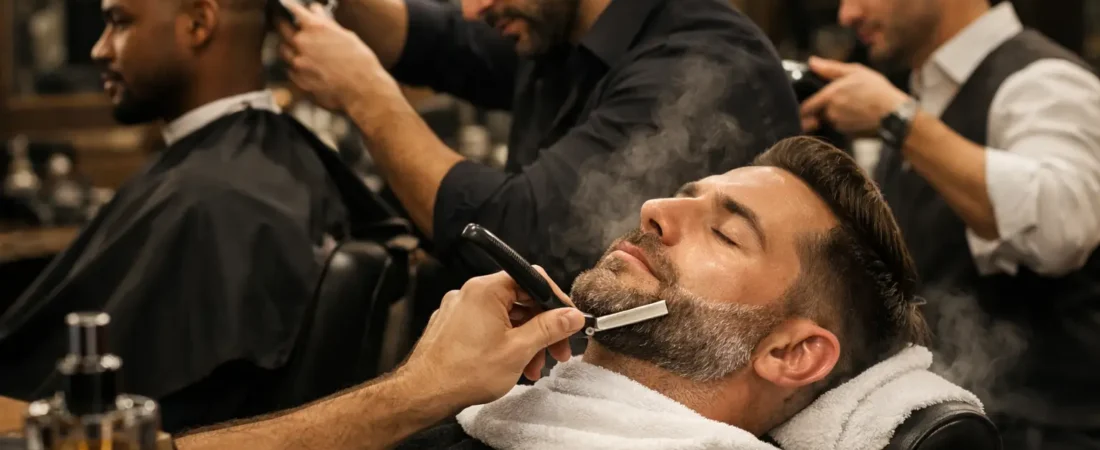
If you prefer a clean-shaven appearance, a relaxing hot towel shave offers a refined finish before an important meeting. Schedule it close enough to the interview that the result feels fresh, but not so close that your skin is irritated. Your comfort matters as much as the visual result.
How to Speak to Your Barber Before the Appointment
You do not need barber terminology to get a polished result. Be clear about the purpose of the appointment and how you want to feel walking into the interview. Saying, “I want a clean, professional shape that is easy to style,” gives your barber useful direction.
It also helps to explain what has not worked for you before. Maybe the sides were taken too high, the top was cut too short to style, or your beard line felt too sharp. Those details allow for better decisions than a photo alone. Reference images can be useful, but your hair density, growth pattern, and face shape should guide the final version.
At Gentlemen’s Barbershop, the consultation is part of the service. A precision haircut is tailored around the finish you want, whether that means a conservative scissor cut, a clean taper, or a fade that remains sharp without overpowering your look.
Style It Simply on Interview Morning
A freshly cut style still needs a calm, controlled finish. Start with clean, dry or lightly damp hair, depending on the product you use. Apply a small amount of product first. You can always add more, but overloading hair with pomade, clay, or cream can make it look stiff, greasy, or overly deliberate under office lighting.
Choose the finish that suits the cut. A matte product is often ideal for natural texture and modern styles. A light cream can control medium-length or scissor-cut hair while keeping movement. If you wear a classic side part, a modest amount of low- to medium-shine product can create a neat finish without looking dated.
Avoid trying to make every strand identical. The goal is controlled texture, not a helmet. Check the back and sides in a second mirror, then leave it alone. Constant adjusting tends to create flyaways and makes you more self-conscious before the conversation even begins.
The Details That Complete the Look
A professional appearance is built through consistency. Your haircut should be clean, but so should your shirt collar, glasses, nails, and shoes. If you wear fragrance, keep it subtle. If you use beard oil or styling product, use enough to improve the finish without announcing itself before you do.
Most importantly, choose grooming that gives you confidence rather than distraction. When you know your hair is sitting well and your beard is properly shaped, you can focus on eye contact, thoughtful answers, and the people across the table.
Book with enough time to enjoy the ritual, not just squeeze in an errand. A precise cut, a considered beard trim, and a few quiet minutes of care can help you walk into an interview looking like the capable professional you already are.